
Eli, Rachel and Izhak Ben-Zvi's second son, was born in February 1924. They had just moved to their new cabin in the Rehavia neighborhood that very week, and thus Eli was the first child to be born in the new neighborhood.
The Ben-Zvi’s, like many of their neighbors, were prominent figures in the Yishuv. During the long hours when their parents were working, Eli and his older brother, Amram, were looked after by their maternal grandmother, Shoshana Lishansky. During meetings in the cabin, the two boys would run around under the grownups' feet, taking in random words from the conversations around them: aliya, settlements, weapons, British… Little Eli especially liked helping the women working in the tree nursery established by Rachel next to the cabin – assistance which once almost proved fatal when he fell into a water barrel.
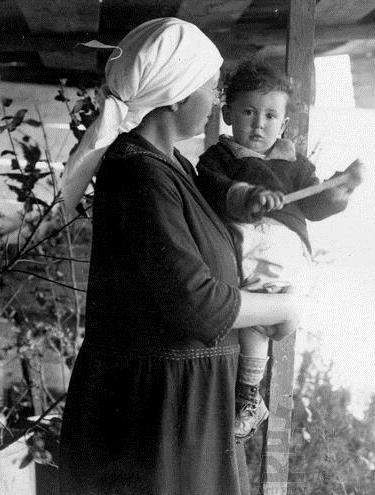
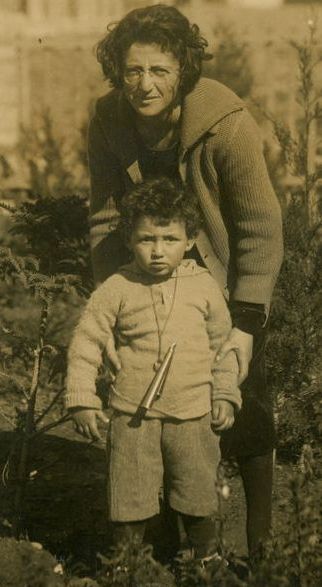
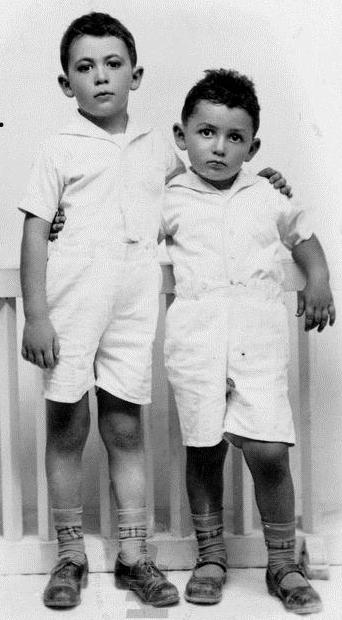
During the 1929 riots, while his parents were engaged in defending the Yishuv in Jerusalem, Eli (aged four and half) stood at the entrance to the cabin. His brother Amram had been sent to Haifa and he had stayed behind with his grandmother. Over his shoulder, Eli had a "rifle" made of two sticks and a rope, and he announced that he will protect his grandmother, since he was "the only man in the house". When he heard that his mother's agricultural farm in Talpiyot had been attacked, he was afraid that the rioters had come to take the soil meant for the plants and asked with concern, "Mother, what will happen if we have no soil?" Later, Yosef Nahmani would write that Eli inherited his love of the land from his mother, and the love of mankind from his father.
Eli attended the Rehavia Gymnasium, next to his family's house, and was a responsible and level-headed child, with a well-developed moral sense. When he was eight, he decided to deepen his knowledge of Judaism, and for almost a year he abstained from meat and wine, in the manner of a biblical monk. When he grew up, he was an enthusiastic member and guide in the youth movement Hamachanot Haolim. During the events of the Arab revolt (1936 – 1939), he was a signal operator with the Hagana and the margins of his notebook were illustrated with drawings of Tower and Stockade settlements. During school holidays he went with his classmates to work on agricultural farms, and longed to attend an agricultural school, as his brother had before him.
After attending the Gymnasium for seven years, Eli moved to the Kadoorie Agricultural High School in the lower Galilee, near Kfar Tavor, where his parents had been among the founders of the Hashomer organization. For his entrance exam, he wrote a composition with the title "My reasons for choosing agriculture as my life's vocation". His parents were proud of him, a fellah from the Galilee, much like the Jews of Peki’in, whom Rachel and Izhak viewed as an historical remnant of the continuity of Jewish settlement in the Land of Israel. Eli was on the Students' Council, and together with some of his friends joined the Palmach. After an expedition with his friends, he asked his father – a scholar of the Land of Israel and the head of the Havaad ha-Leumi (The National Committee) – to send him maps and information about rivers, Arab villages, and the Jewish settlements in the Lower Galilee.
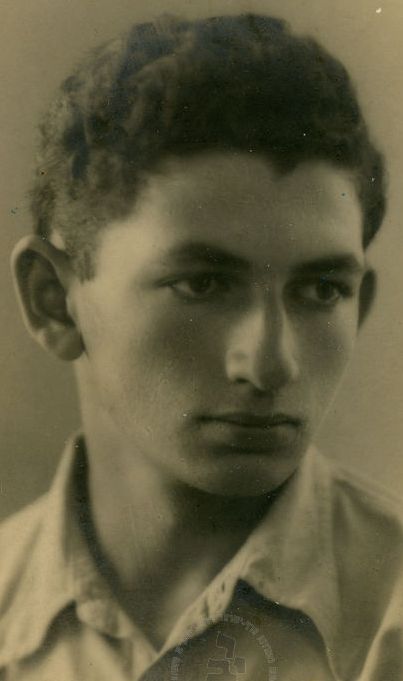
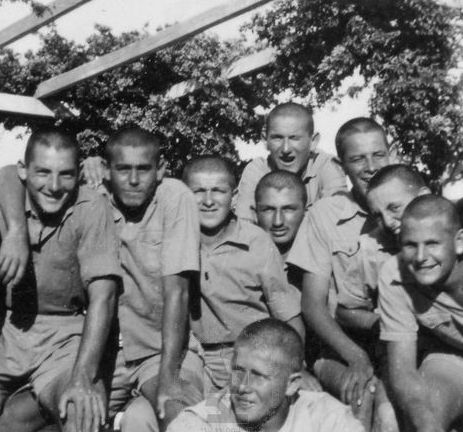
In the summer of 1942 Eli completed two years of study at Kadoorie, and set out with his friends on a period of military and agricultural training at Kvuzat Kinneret. His letters describe his deliberations as to whether he should join the British army – like his brother Amram – or stay in the ranks of the Palmach. In the end, after long deliberations and discussion with his friends, he decided that the challenges in the Land of Israel were graver, and he went to Kibbutz Yagur with a Palmach company. In the winter of 1944 Eli and his company went on a training mission in the Negev, during which Eli was injured. His comrades extracted him from the Makhtesh Hakatan (small crater) in the Negev by a trail which until today is known as Maaleh Eli (Eli’s ascent).
In August 1944 Eli and his comrades – most of whom were Kadoorie graduates – founded the Palmach’s first settlement, not far from the school. Rachel Yanait Ben-Zvi, who had just returned from Berl Katznelson’s funeral at Kinneret, joined Eli and his friends who established their settlement using the rapid strategy of homa u-midgal (tower and stockade). In her imagination, her son and his friends were like her erstwhile comrades, such as Alexander Zaid, the founders of the Hashomer (the Watchman) organization a generation earlier. The settlement’s name – Beit Keshet – was chosen on the advice of Izhak Ben-Zvi, who was inspired by the verse “To teach the sons of Judah the bow [keshet]” (2 Samuel, 1:18).
Eli, who could speak Arabic and English, was chosen to be the kibbutz’s leader and established friendly relations with the Jewish and Arab residents in the area. The manager of Kadoorie, Nathan Fiat, was proud of his graduates and helped them every now and then. The members of Beit Keshet called Eli "Kulka", probably after the character of a boy who was a guide and teacher in a Russian movie. In letters to his parents, brother, and aunt (Batya Lishansky), he described the agricultural work and the development of the farm happily. In the autumn of 1945 he wrote: “it is a wonderful experience to harvest for the first time that which we have sown ourselves.” He shared the young kibbutz’s challenges with his parents – the main challenge being purchasing and working the land – but he did not ask them for help frequently, in spite of their friendship with many high-ranking officials in the Yishuv. He wanted to build a large kibbutz which would be able to take in many new immigrants. He asked his brother “try writing once every few months, otherwise you will forget how to form the letters”.
Eli's letters also reflect the growing political tension, mainly from the beginning of 1947. Sometime during this year, Eli also started seeing Pnina Dromi from Nahalal, whom he had first met while studying at Kadoorie. In 1948, after the killing of the 35 Hagana fighters (“Lammed-Hey”)on their way to Gush Etzion, some of whom he knew very well, he wrote to Pnina that “we must not let our spirit fall, even if the battles increase”. As well as being concerned with sowing and plowing, Eli was also occupied with the security challenges facing his kibbutz. To his parents who were worried about the situation in the Galilee, he wrote: “I should be more worried about you because the situation in Jerusalem is worse.”
Eli and Pnina decided to get married, and the wedding was to take place on March 25, 1948. As a wedding present from his parents-in-law, Eli asked for books for the new kibbutz’s library. The present from his parents, a trip to Europe, was to be delayed because of the problems he was facing – the agricultural work and the kibbutz’s security problems. Ten days before the wedding, on March 15th, Eli and Pnina visited the only jewelry shop in the nearby city of Afula, and chose the two cheapest rings for their wedding. On that happy day, an announcement was sent from Nahalal to the Davar newspaper, and in a letter to his parents. Eli announced the upcoming wedding.
This was his last letter to them. The next morning, March 16th, Eli went out on an armed expedition in the kibbutz fields together with seven other kibbutz members. They were ambushed by members of the neighboring Arab A-zabih tribe and in the ensuing firefight seven kibbutz members were killed, among them Eli. Their bodies were returned after 3 days, thanks to British mediation, and they were buried in the Beit Keshet cemetery. Amram Ben-Zvi, a driver in the convoys to the besieged city of Jerusalem, heard about his brother's death and was able to attend the funeral. Eli's parents came from Jerusalem, in spite of the dangerous conditions.
From Beit Keshet they went with Pnina to Nahalal. From their room in Beit Keshet, Pnina took Eli's ID and placed inside it the ring that had never been used. Izhak Ben-Zvi read King David's elegy for Saul and Jonathan, which had inspired the name of the settlement Eli had founded and on whose lands he was killed. Fifty years later, Pnina said at a conference at Yad Ben-Zvi:
At the end of the funeral, Eli's parents, Izhak and Rachel, took me home to Nahalal. We were very hungry when we got there. From all over, women from Nahalal came and brought trays laden with food which had been prepared for the wedding. We ate in a deathly silence. Like it always was in those days, everyone put on a brave face and no one cried in public.
From Nahalal they went to Tel Aviv, where Pnina stayed for a week. "Every night I went to the play Hu halach ba-sadot (he walked in the fields), and my grief mingled with that of Mika's grief over the death of Uri." The bereaved parents set aside a corner of their cabin for a memorial for Eli, and established a book fund in his memory. Rachel Yanait kept up a warm correspondence with Pnina, and she came to stay with them in Jerusalem. In her letters to Pnina, Rachel, who like others of her generation did not cry in public, allowed herself to express her emotions: “In the atmosphere of our cabin, like at the graveside at Beit Keshet [… there are] grief and sorrow which choke the soul – why was I not taken instead of Eli", and thus in Rachel's letter is an echo of King David's words about his son Absalom. "I pray that you find comfort for your soul and tranquility for your heart, and that the memory of Eli remains blessed in your heart […] and till the end of my days, we will be connected."
At the beginning of the 1950s Rachel and Izhak decided to donate their cabin in which Eli grew up to Kibbutz Beit Keshet, to be used as a cultural center. Since 1948 the kibbutz has stood on a hill, on the outskirts of which the battle took place. A memorial monument for the fallen members, sculpted by Batya Lishansky – Eli's loving and beloved aunt, was placed on the top of the hill in 1958. Batya gave Pnina a bust of Eli which she kept with her all her life. At the beginning of the 2000s, the President's cabin in Jerusalem was recognized as a National Heritage Site and it was renovated and redecorated. After a while the Ben-Zvis' original cabin at Beit Keshet was similarly recognized and also renovated, and it is now used as an educational center relating the history of the Ben-Zvi family.
Years later Pnina, who became a widow before she was a wife, married the journalist Robert Gary and became a theater actress. In 2008 Pnina wrote a play about her love story with Eli against the background of the War of Independence. The play, "An Israeli Love Story" was a success and was later published as a book and made into a film. Eli's memory is preserved in the cabin at Beit Keshet, at the path in the Makhtesh Hakatan in the Negev and in the educational center Beit Eli in Ashkelon (which used to be a holiday home for his parents), as well as in the book Eli in which his family and friends describe him and his life, and in the photo collection donated by Pnina to Yad Ben-Zvi's photo archives.