
During the renovation of the House of Women Pioneers, an old wooden hut was revealed under the tangle of greenery next to the fence along the street, with its key still hanging on the wall. This was the Flower Hut where the produce of the Women’s Agricultural Farm’s nursery was sold to the inhabitants of Rechavia and Jerusalem.
The Women’s Agricultural Farm and the nursery in Rechavia were established by Rachel Yanait Ben-Zvi. During the Third and Fourth aliyot, women’s agricultural farms were established all over the country and new female immigrants were given training in farming, crafts and agriculture. In 1924 the neighborhood of Rechavia was established, and Rachel Yanait managed to secure a plot of land to open a farm for women workers. The pioneers opened a nursery which supplied saplings and flowers to neighborhoods in Jerusalem as well as to foresting projects outside the city.
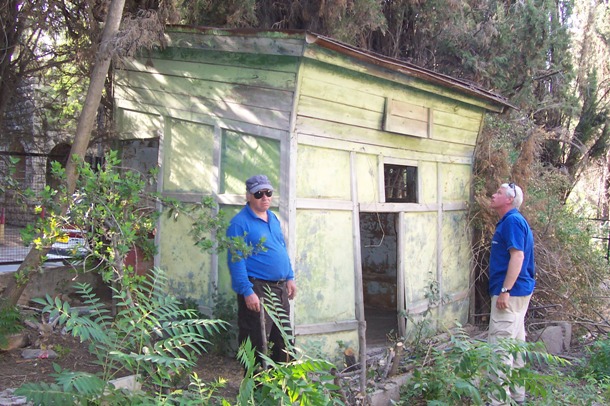
Several years later, when the neighborhood grew, the farm was moved to the Armon Hanetziv area in south Jerusalem. The nursery in Rechavia continued to operate on about two-thirds of the original plot; the rest of the land was occupied by the site of the House of Women Pioneers which had been established in the early 1940s and was active, in one form or another, in the following decades. The Flower Hut was still used to sell the farm’s produce, mainly flowers for Shabbat, to the inhabitants of Rechavia and the surrounding area.
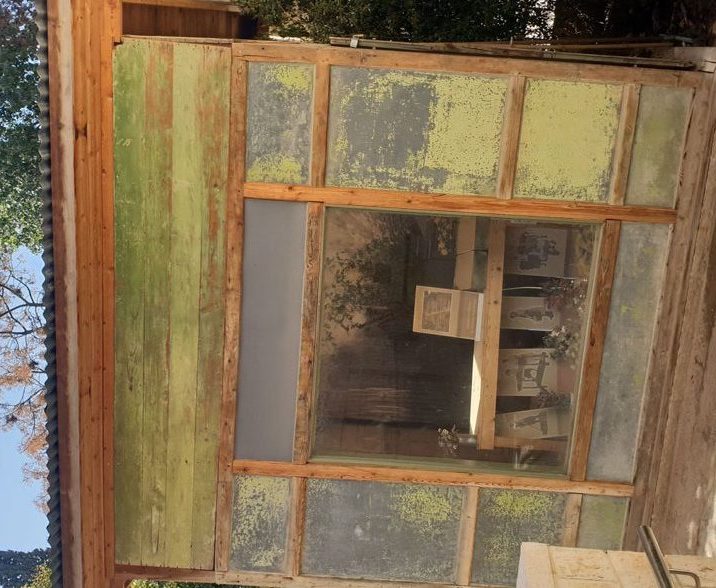

Over the years, as the neighborhood and its inhabitants changed, the Flower Hut was forgotten and was covered up by thick shrubs, which also preserved it. In the 2000s, it was rediscovered, dismantled and renovated by experts from the Israel Antiquities Authority. It was rebuilt on the other side of the House of Women Pioneers, with an exhibition depicting its history. The Flower Hut, a last remnant of the huts built in the neighborhood’s early days, overlooks the Kuzari Garden, the green boulevard and daily life in today’s Rechavia.